Move the pointer to turn it.Drag sideways to turn it.
Charge light
One light tells you what is left.
Amber rises from the bottom as the battery fills. Forty segments, 2.5% of the pack each.
62% · 8.4 kWh42 hours of the sample house
Inside
Sixteen cells and one inverter.
Lithium iron phosphate cells wired as one 51.2 V pack. The inverter under them feeds the house panel.
On the wall
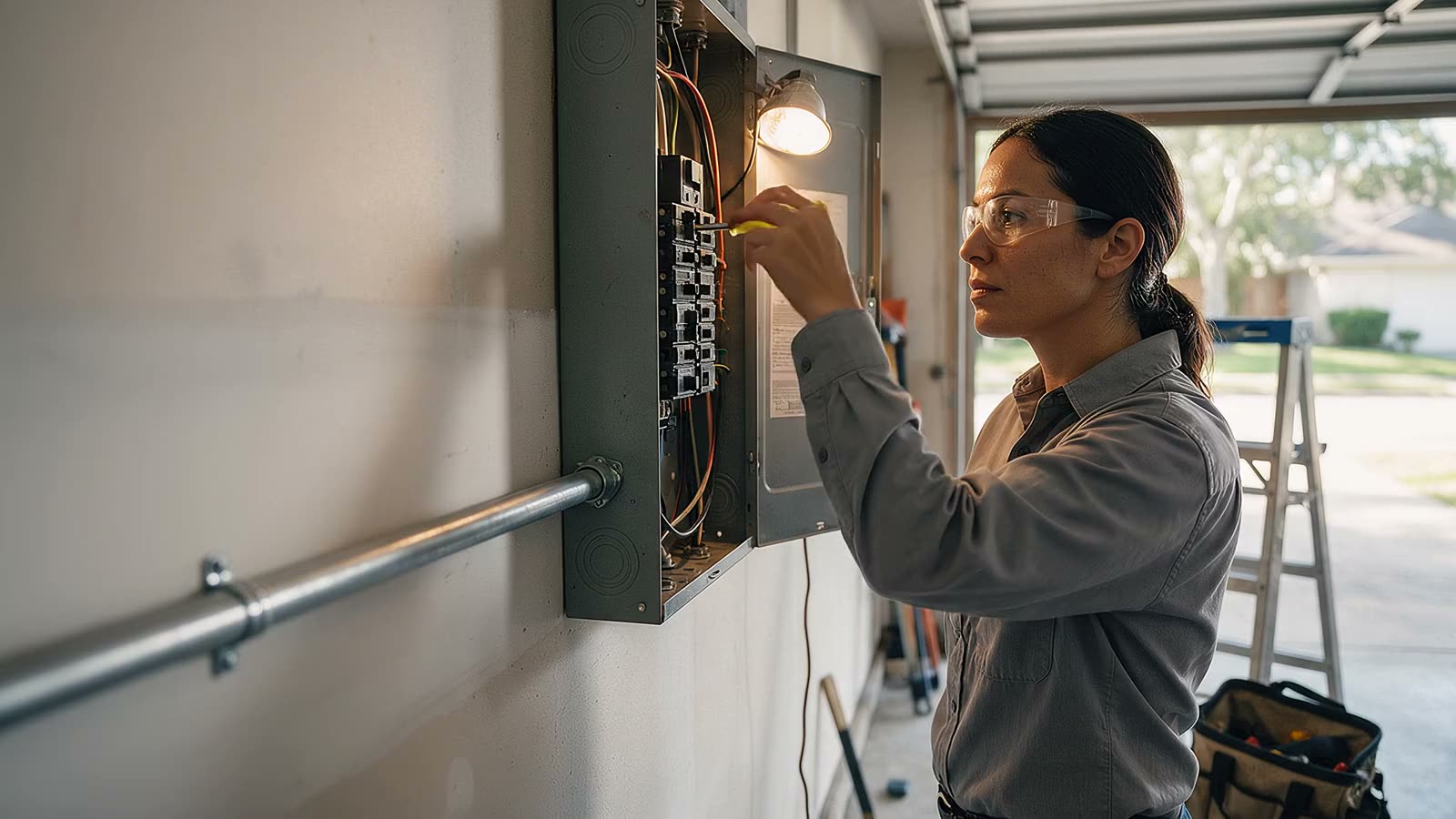
It lives on the garage wall.
29.5 in wide and 5.9 in deep, fed by one conduit from the panel. Rated NEMA 3R, so an outside wall works too.
The numbers
What 13.5 kWh means.
13.5 kWh
stored behind the shell
68 hours
the sample house on one charge, at 4.76 kWh a day
21.6 kWh
back in one clear day on a 6 kW roof
282 lb
on the wall, 45.3 × 29.5 × 5.9 in
Figures are the sample house’s. Yours will differ.
Powder-coated aluminum
Charge light
Anodized frame
62% · 8.4 kWh42 hours of the sample house
Frosted lens, flush with the shell
16 LFP cells, 280 Ah each
Nickel-plated busbars
Inverter and heat sink
Battery management
Side vents
DC isolator
Conduit to the house panel
One outage, hour by hour
61 hours without the grid.
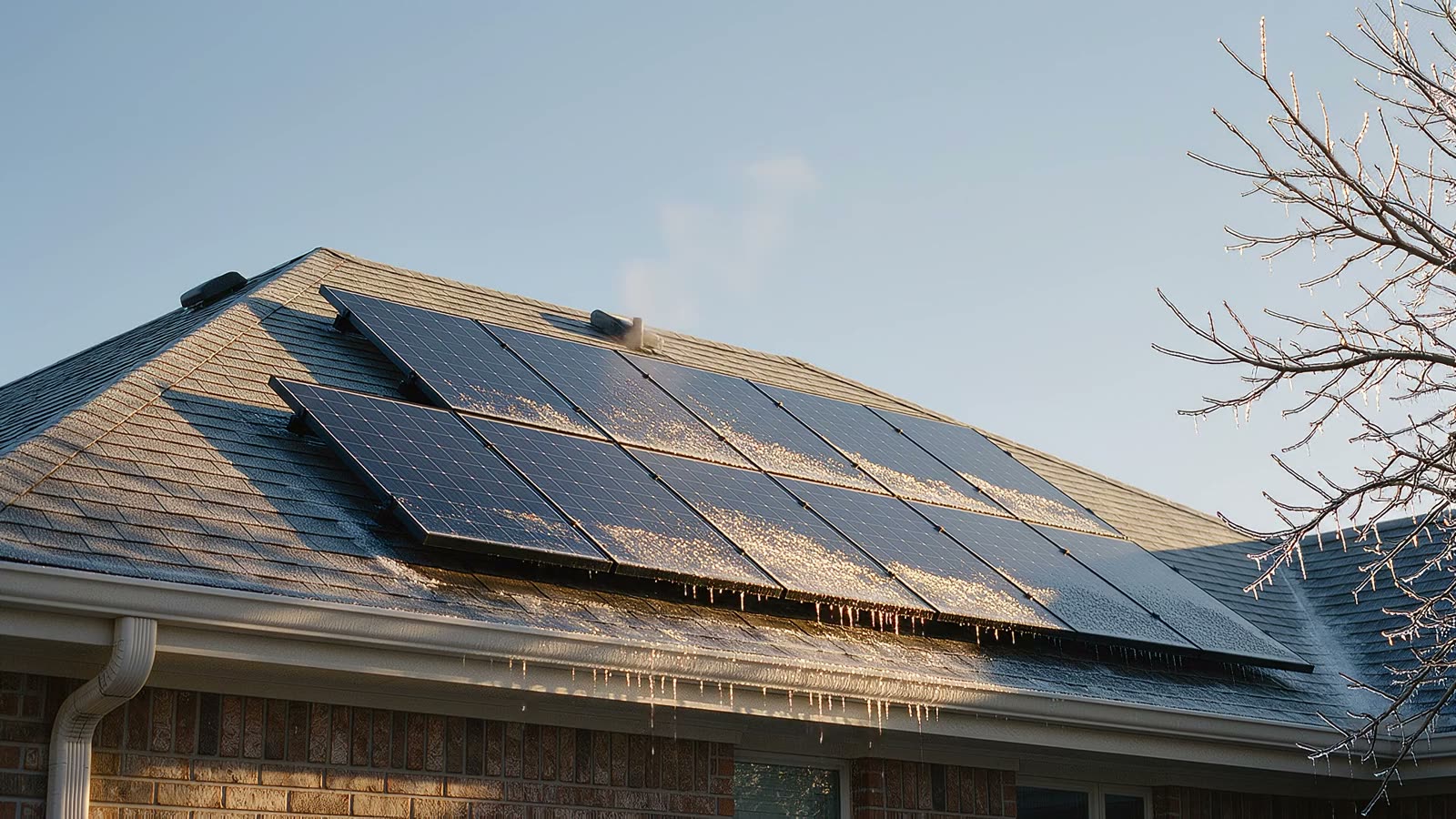
An ice storm, one house, one K13 and a 6 kW roof. Every figure is the sum of what the house had switched on.
Hour 0 · 6 pm, day 1
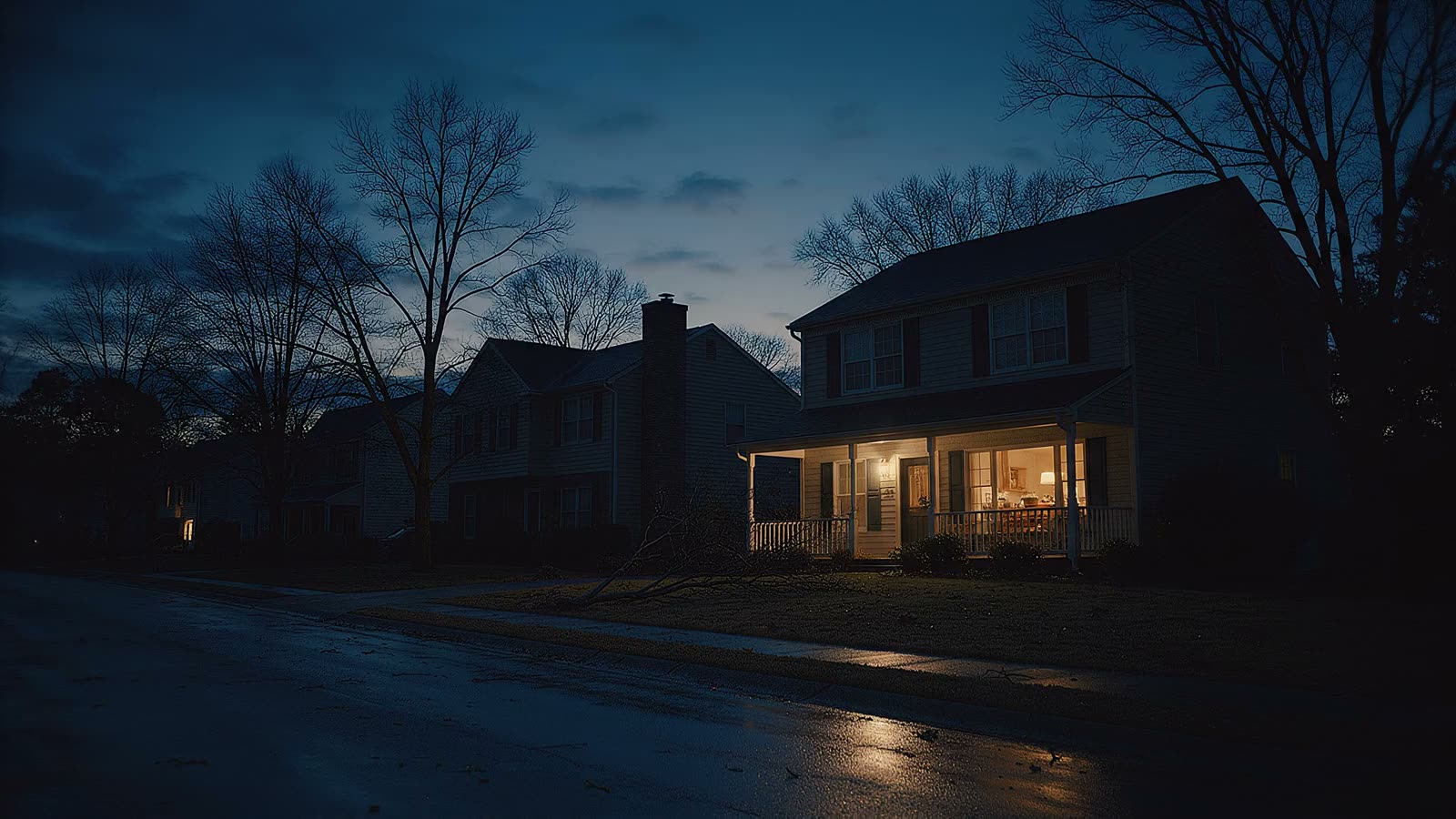
The street goes dark.
Freezing rain takes the lines down at 6 pm. One house keeps its windows: the battery took it over by itself, with a full 13.50 kWh, and nothing inside needed a restart.
Hour 4 · 10 pm, day 1
The CPAP starts its night.
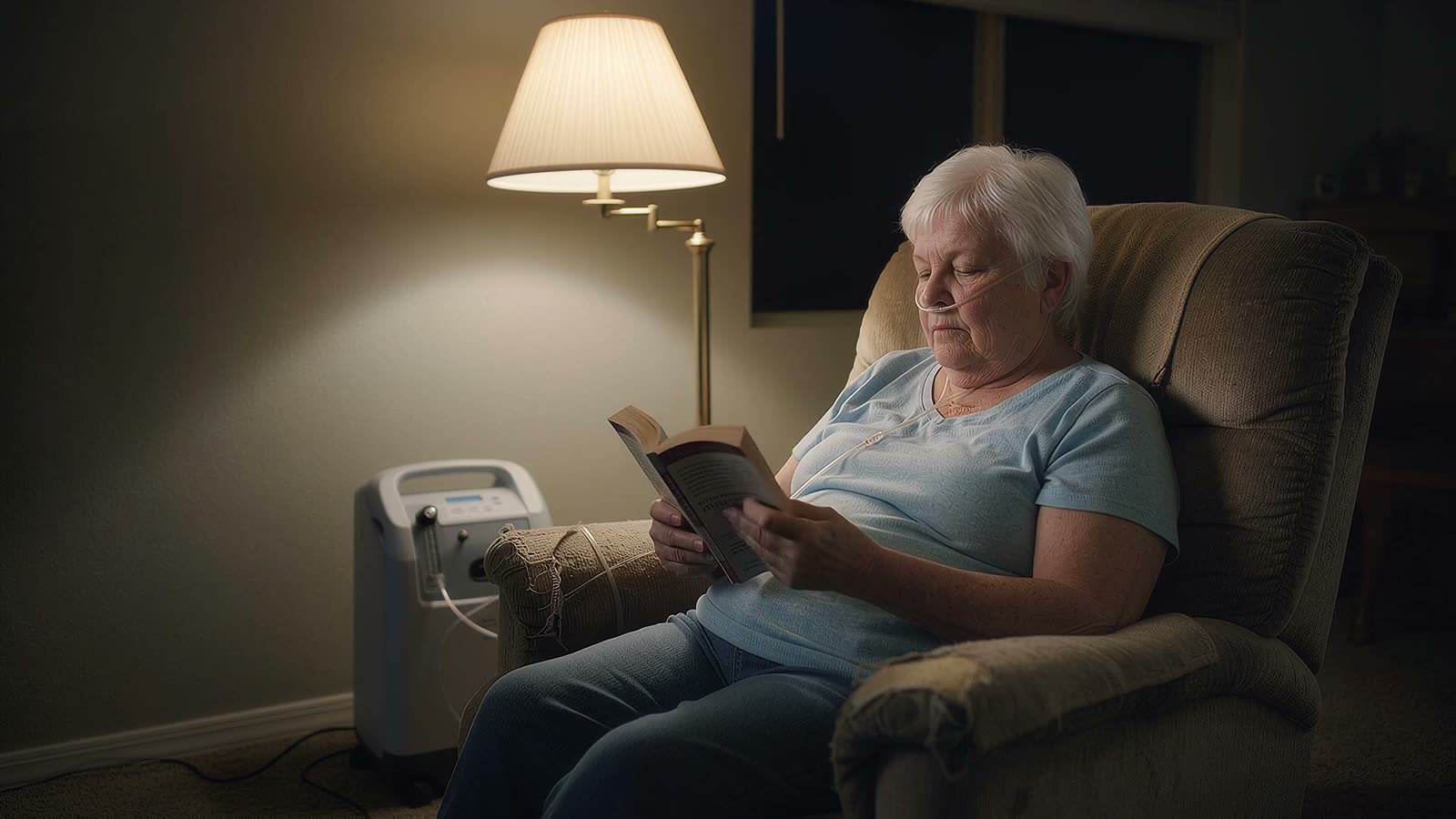
At 10 pm the mask goes on and the house draws 270 W. The CPAP will take 0.32 kWh by morning. The battery holds 12.58 kWh.
Hour 12 · 6 am, day 2
First morning.
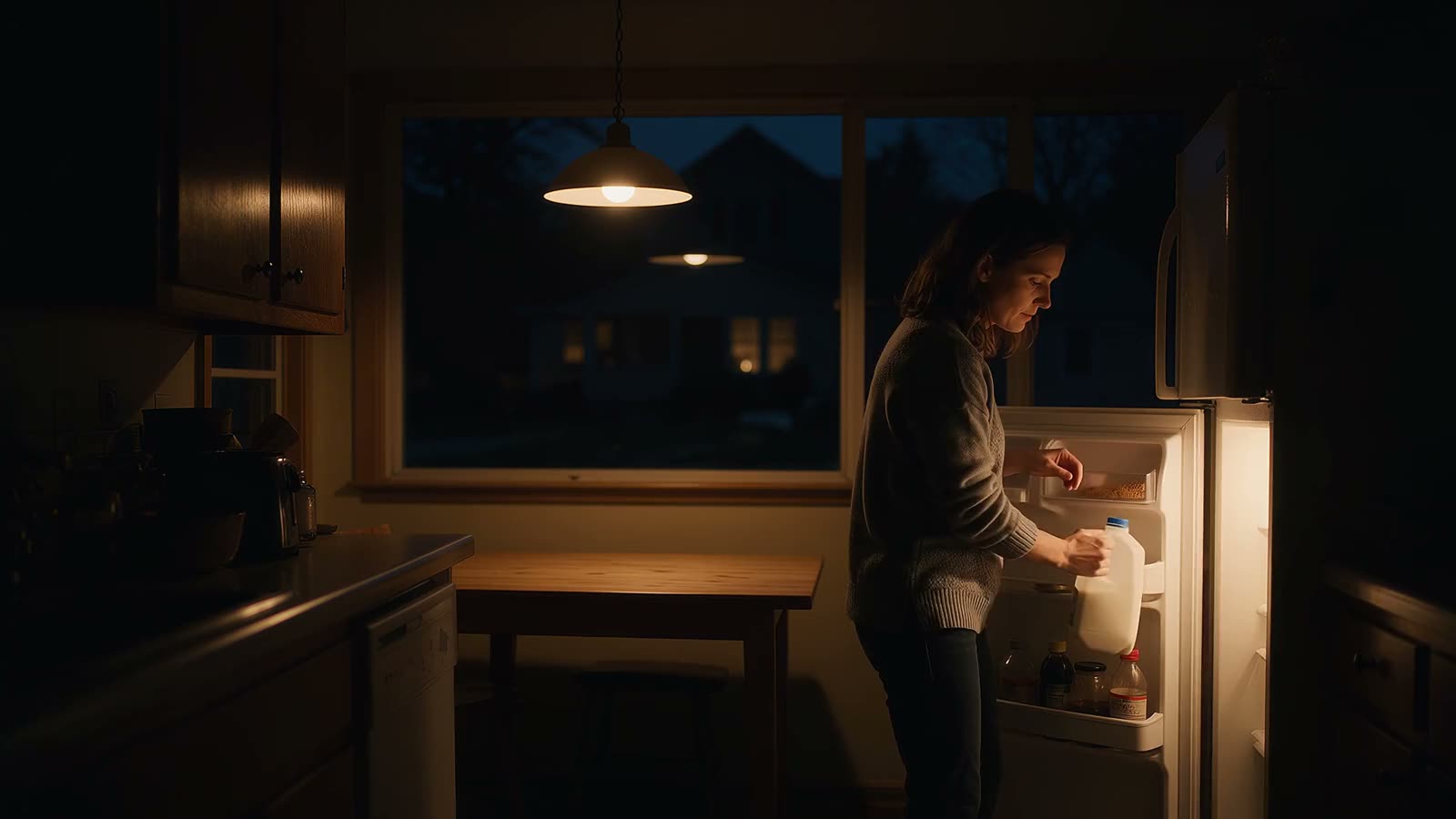
Twelve hours in, the night has used 2.72 kWh. The fridge is cold, the router never dropped, and 10.78 kWh is left.
Hour 41 · 11 am, day 3
The sun comes back.
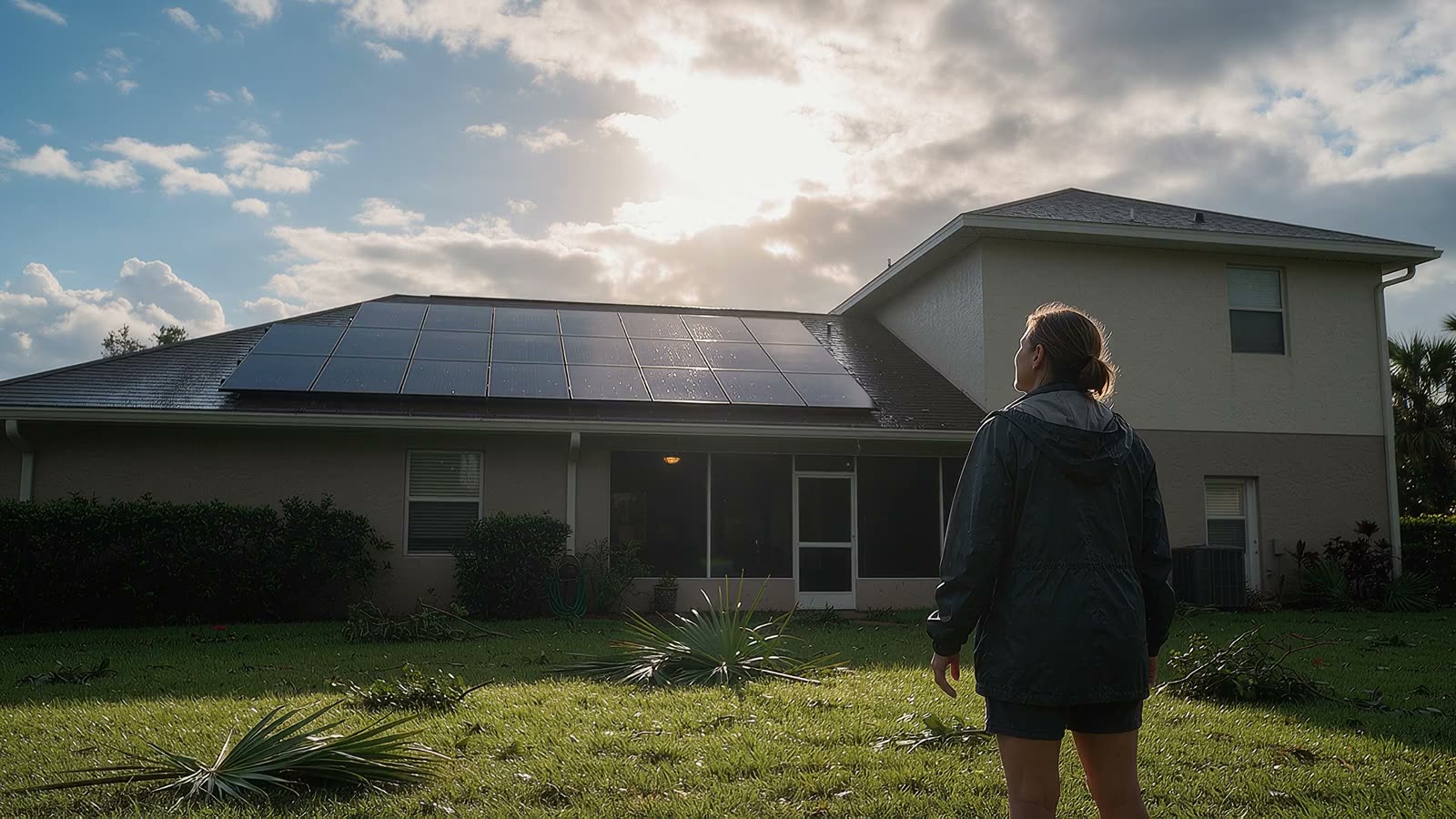
The sky clears on the third day. A 6 kW roof makes 21.6 kWh on a clear day, more than the battery holds, and by 11 am it is full again: 13.50 kWh.
The grid comes back at 7 am on day 4, 61 hours after it left. The battery never fell below 7.91 kWh.
Choose the appliances and the hours a day each one runs. The sum is yours: how long one, two or three K13 keep that list going, with and without a roof.
Typical average draw of each kind of appliance, not a measurement of yours. The label on the back of the appliance has its own figure.
This list runs for68 hours
This list runs for
68hours
2 days and 20 hours on one charge, with no sun.
Uses in a day
4.76 kWh
All on at once
270 W of 7.6 kW
Batteries
Roof
No solar: the battery carries the list on what it holds.
One K13, its backup switch and the installation. Set yours below; the next step books a free site visit, and no card is asked for.
Warranty
10years
70%of its capacity, or we fix it
If the K13 holds less than 70% of its 13.5 kWh within 10 years of the day it was switched on, we repair or replace it. Parts, labor and the trip are covered.
Add up the watts of what you want on, times the hours a day each one runs, and divide 13.5 kWh by that. The sample house on this site uses 4.76 kWh a day, so a full charge lasts about 68 hours with no sun. The calculator does the sum for your own list.
Do I have to do anything when the power goes out?
No. The backup switch takes the house off the grid and the battery takes over by itself. What helps is deciding beforehand what stays on.
Can it run a medical device?
It keeps a CPAP or an oxygen concentrator running like any other load, and the calculator shows how long each one lasts. Ask your doctor and the device maker how long it must run, and keep a plan for when the charge gets low.
Does it need solar panels?
No, but it recharges from them. Without panels it carries the house on its stored 13.5 kWh. With them, a clear day can fill it again: a 6 kW roof with 4.5 sun hours makes about 21.6 kWh after losses.
Where does it go?
On a garage wall, a utility room wall or an outside wall: the case is rated NEMA 3R. It needs 29.5 in of wall and 5.9 in of depth. If the wall cannot carry 282 lb, it stands on the floor on steel feet.
What does it cost?
One K13 is $7,900. A home also needs one backup switch ($1,150) and installation ($2,600 for the first unit). That is $11,650 for one unit on the wall, before sales tax. The installer confirms the price at the site visit.
What does the warranty cover?
If the K13 holds less than 70% of its 13.5 kWh within 10 years of the day it was switched on, we repair or replace it. Parts, labor and the trip are covered.



 Dorothy A.Asheville, North Carolina