Outages
What happens in your house when the grid leaves.
Nothing. The backup switch lets go of the grid and the K13 carries what you chose. This is one outage in full: 61 hours, every hour added up.
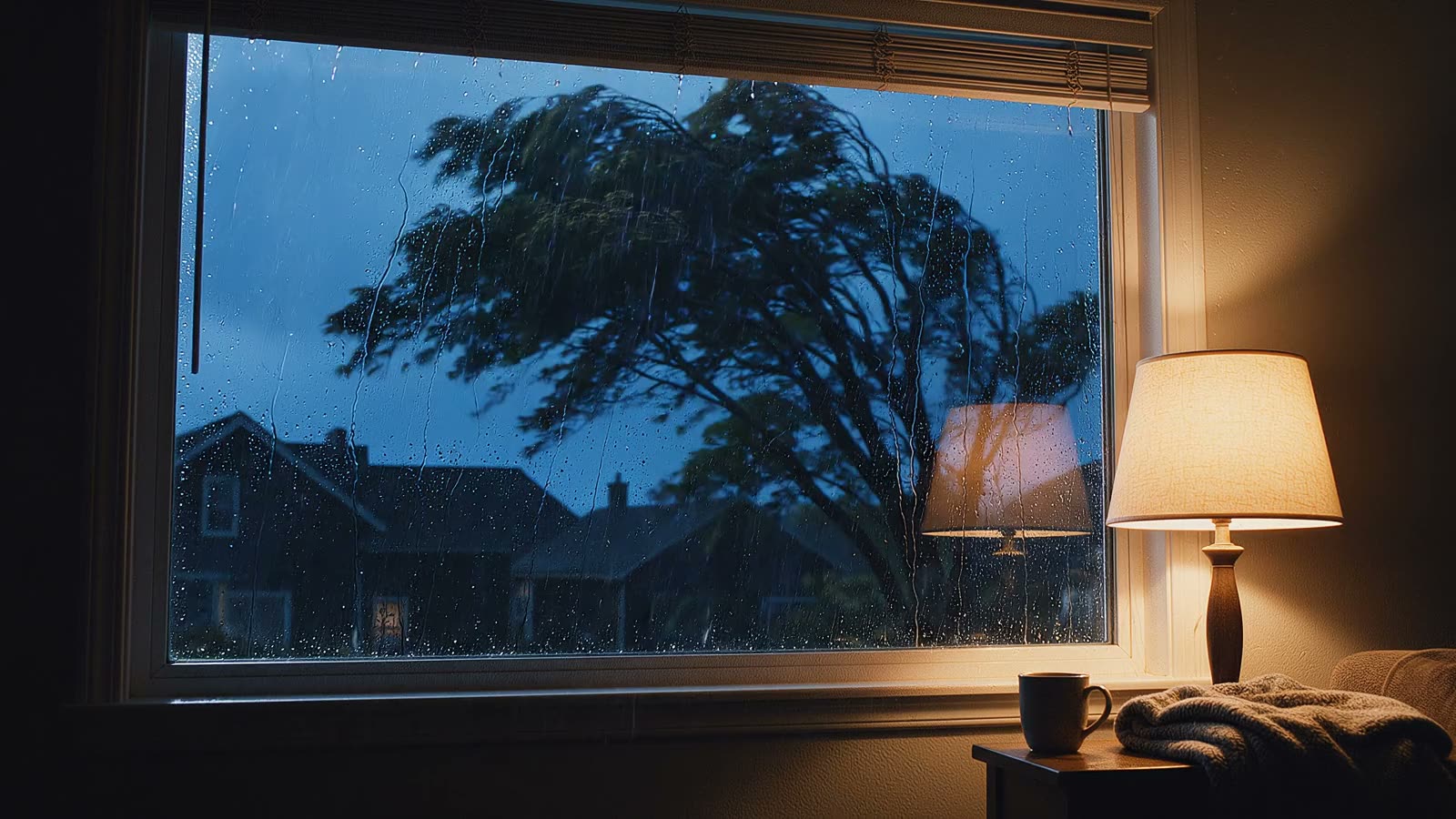
Hour by hour
An ice storm, from 6 pm to the third morning.
The sample house: refrigerator, six LED bulbs, modem and router and CPAP machine. It uses 4.76 kWh a day, and a 6 kW roof gives some of it back when the sky allows.
-
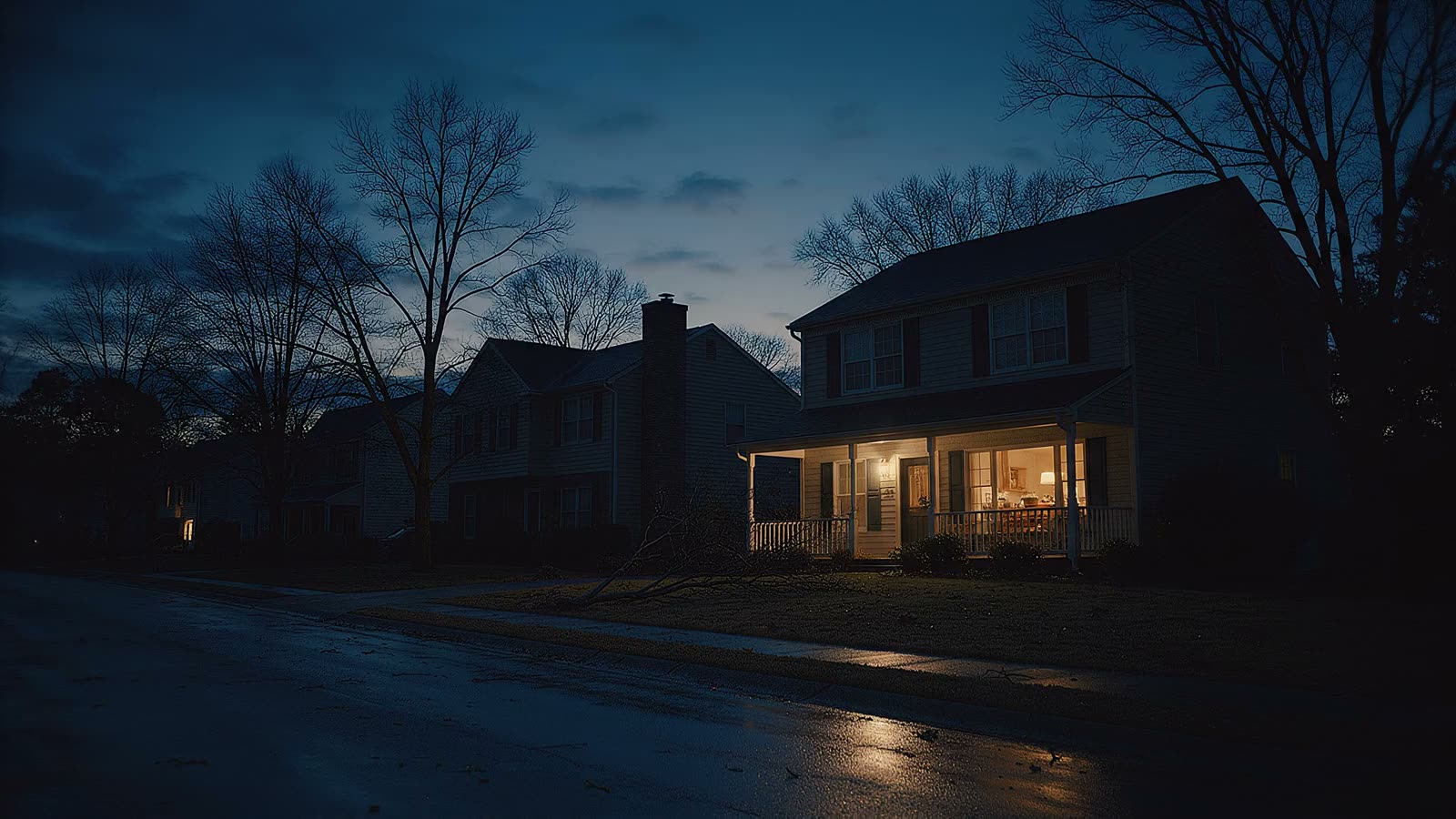
Hour 0 · 6 pm, day 1
The street goes dark.
Freezing rain takes the lines down at 6 pm. One house keeps its windows: the battery took it over by itself, with a full 13.50 kWh, and nothing inside needed a restart.
-
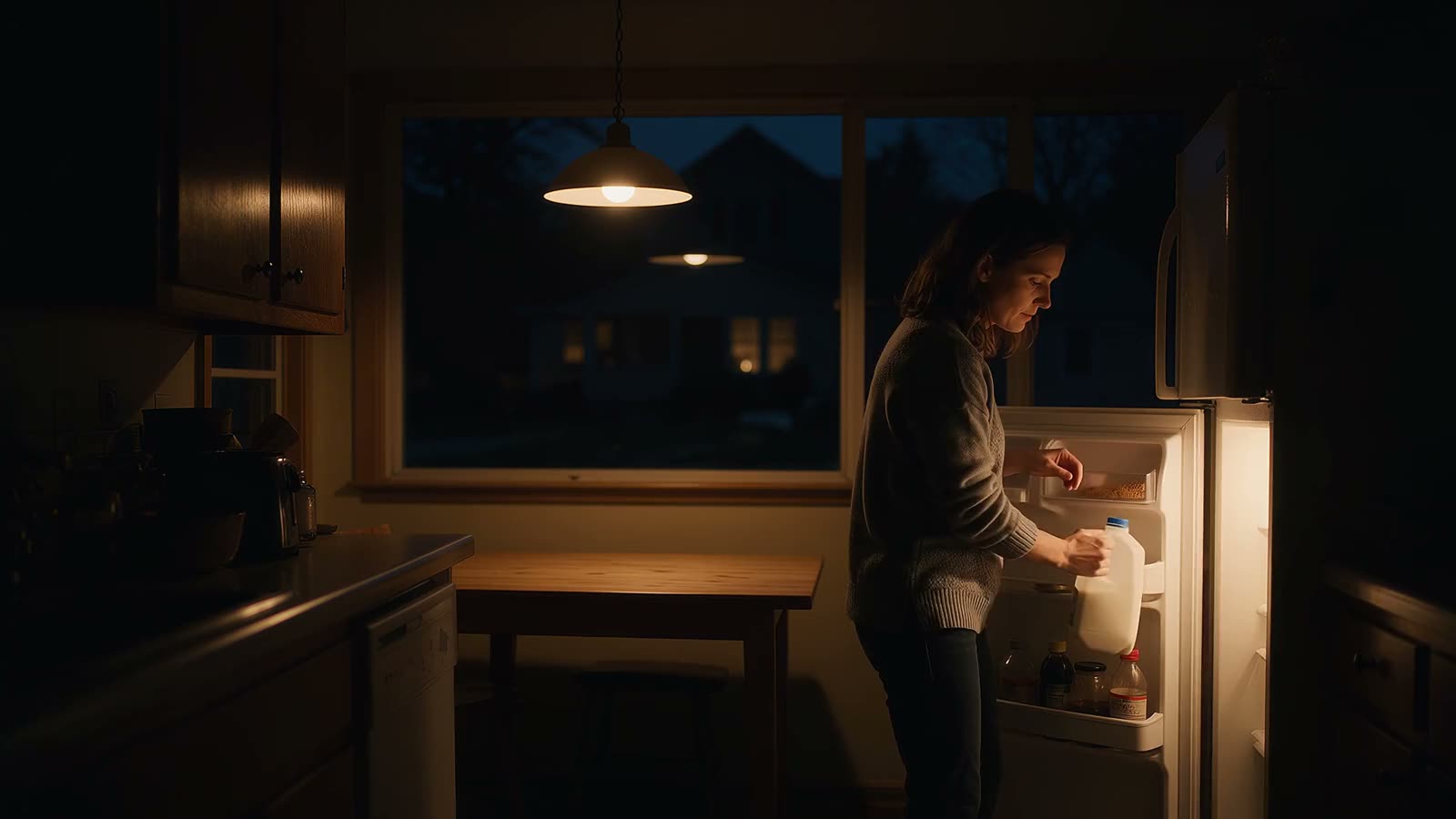
Hour 1 · 7 pm, day 1
Dinner goes on.
The fridge, six LED bulbs and the router are on: 230 W in all. An hour in, the house has used 0.23 kWh.
-
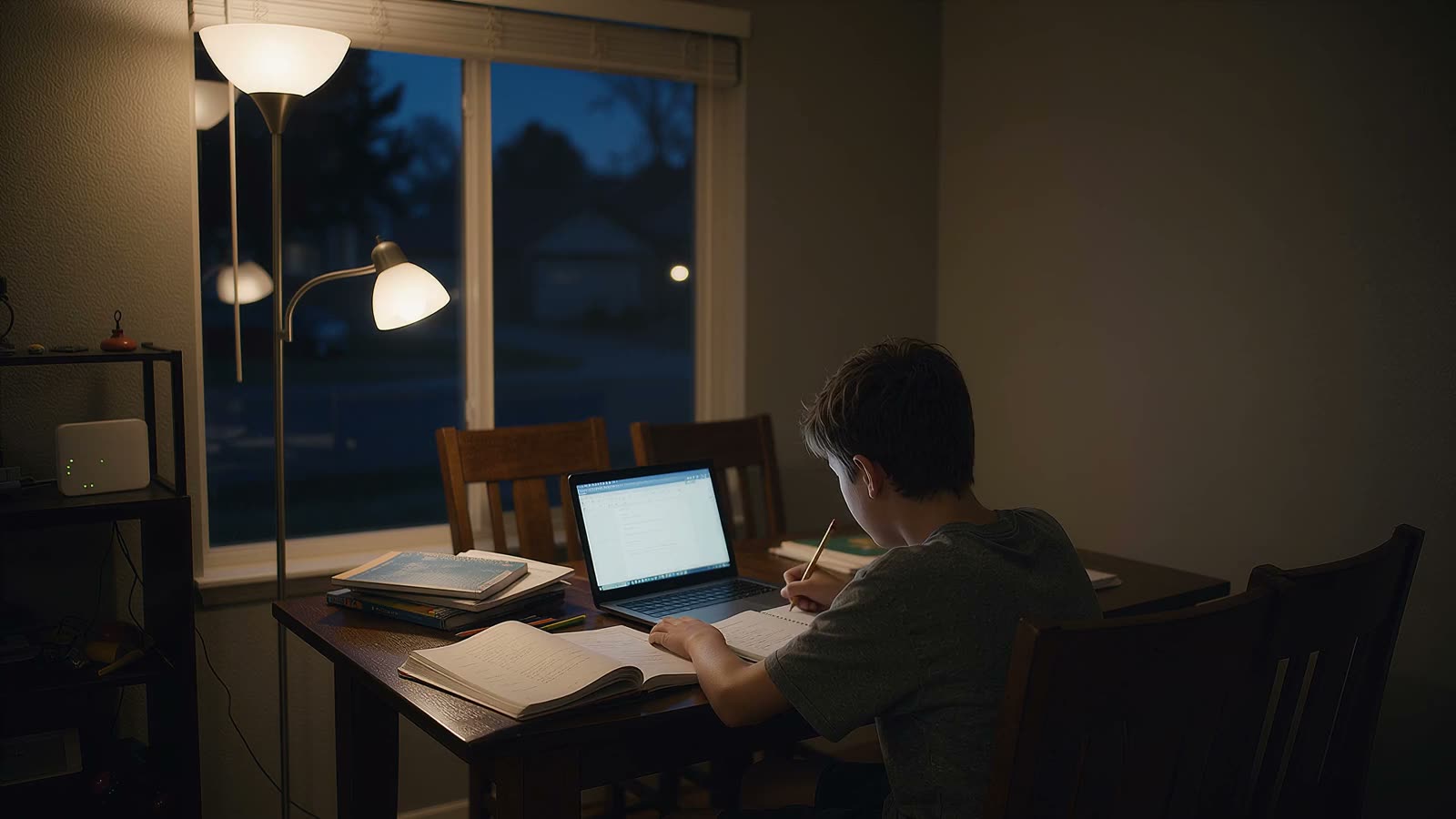
Hour 2 · 8 pm, day 1
Homework, and the internet never dropped.
The modem and router draw 20 W around the clock. That is 0.48 kWh a day to keep the phones, the weather alerts and the school laptop connected.
-
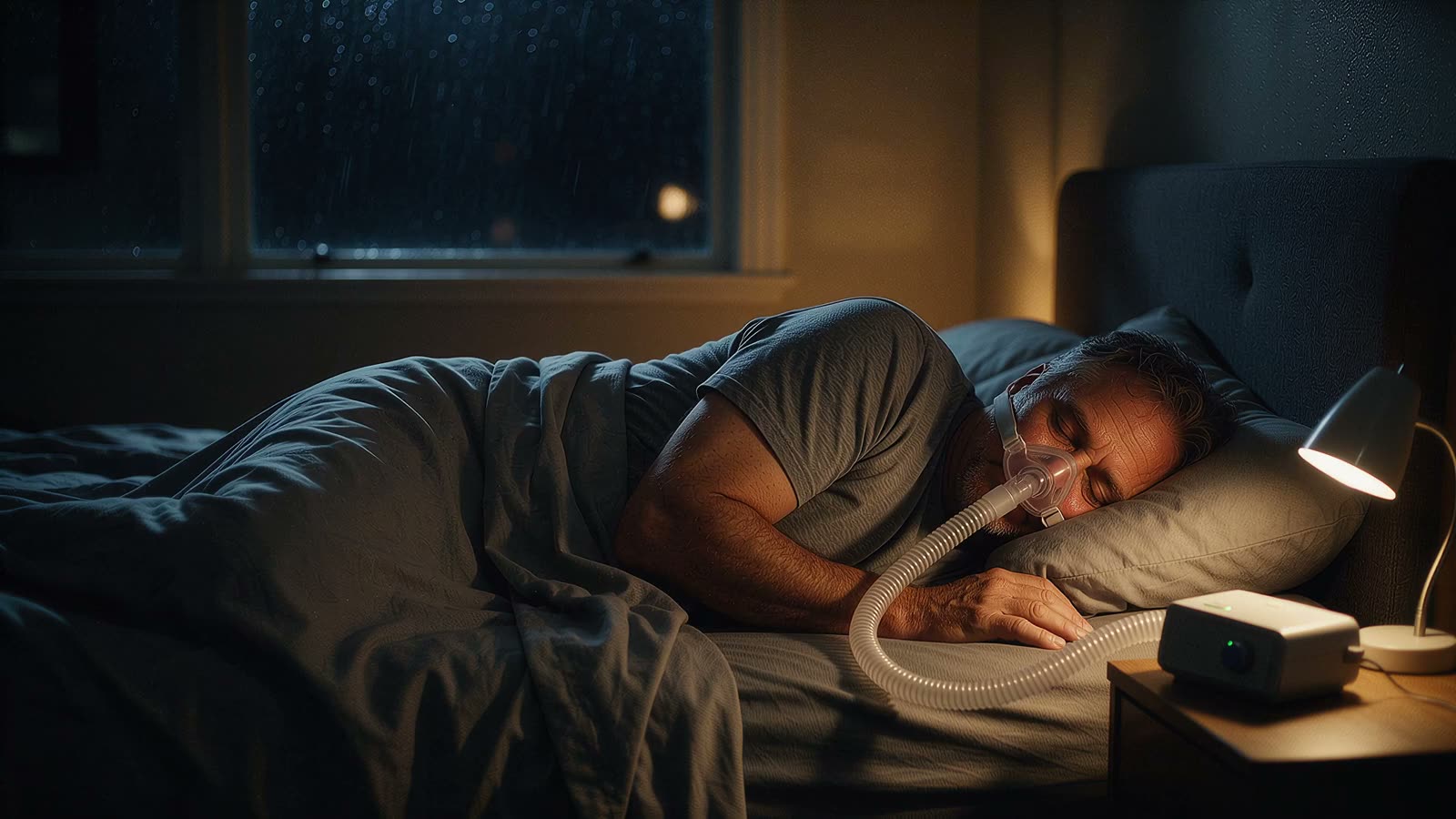
Hour 4 · 10 pm, day 1
The CPAP starts its night.
At 10 pm the mask goes on and the house draws 270 W. The CPAP will take 0.32 kWh by morning. The battery holds 12.58 kWh.
-
Hour 8 · 2 am, day 2
Two in the morning.
The lights have been off since midnight. A fridge, a router and a mask: 210 W. The storm is at its loudest and the battery is at 11.62 kWh.
-
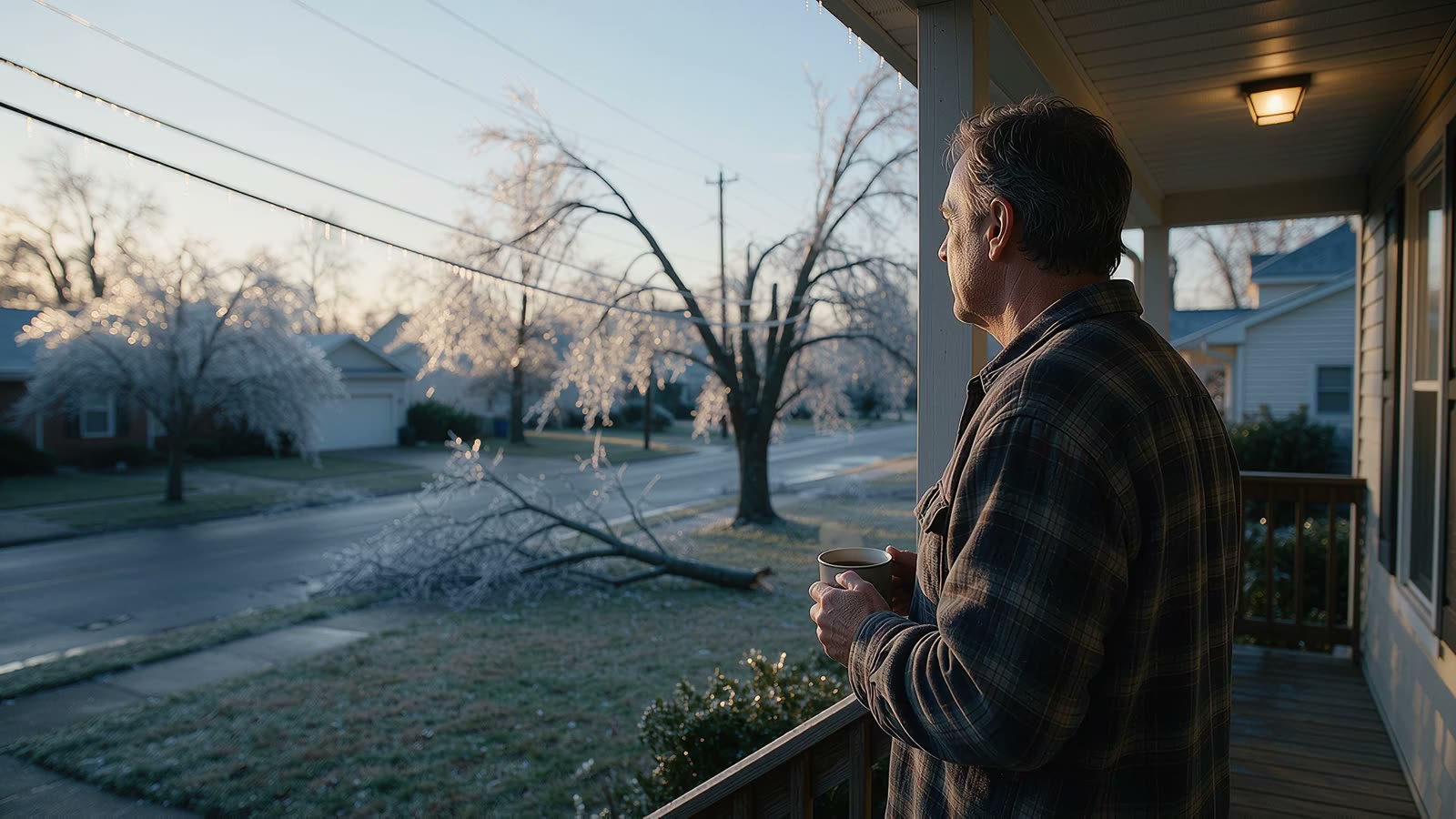
Hour 12 · 6 am, day 2
First morning.
Twelve hours in, the night has used 2.72 kWh. The fridge is cold, the router never dropped, and 10.78 kWh is left.
-

Hour 30 · 12 am, day 3
Second midnight. The milk is cold.
An overcast day gave the roof half an hour of sun: 2.40 kWh back. Thirty hours without the grid and the battery is at 9.68 kWh.
-
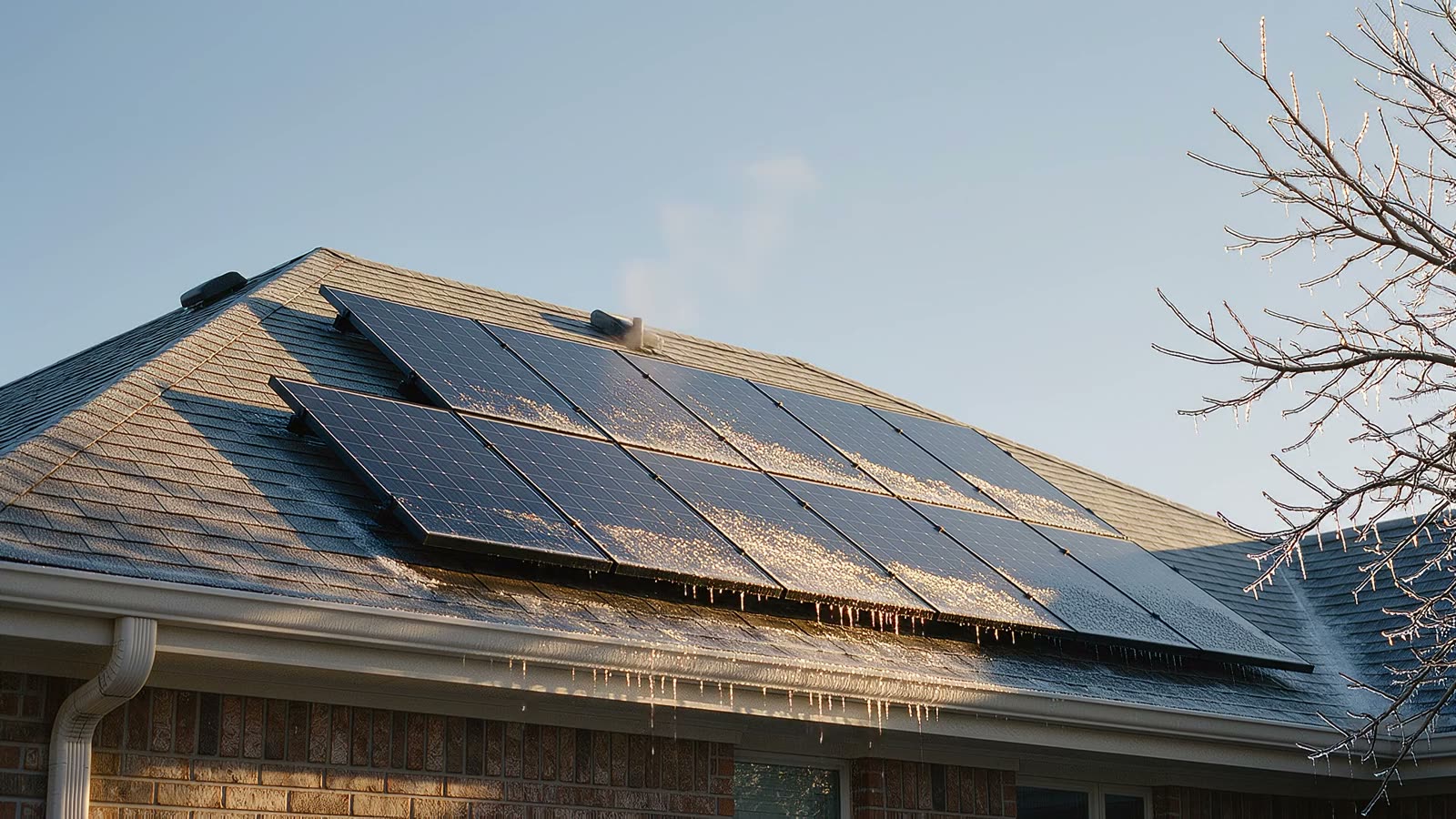
Hour 41 · 11 am, day 3
The sun comes back.
The sky clears on the third day. A 6 kW roof makes 21.6 kWh on a clear day, more than the battery holds, and by 11 am it is full again: 13.50 kWh.
The grid comes back at 7 am on day 4, 61 hours after it left. The battery never fell below 7.91 kWh.
Medical devices
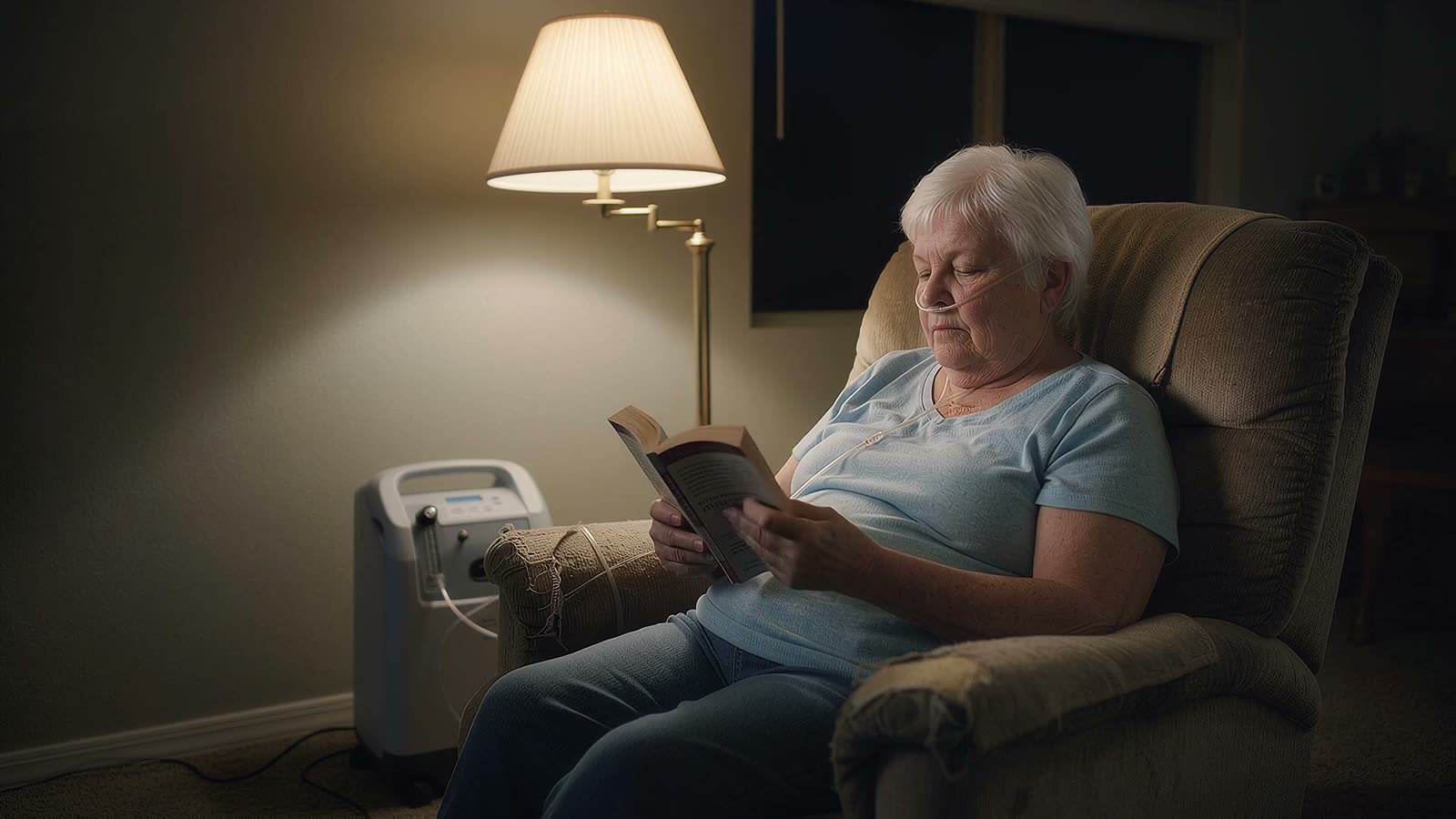
The machine by the bed stays on.
A CPAP with the humidifier off draws about 40 W. Eight hours a night is 0.32 kWh: one charge would run it alone for 42 nights. An oxygen concentrator at 300 W around the clock takes 7.2 kWh a day, so it needs the roof or a second K13 for a long outage.
- Ask your doctor and the maker how long the device must run.
- Put it in the calculator first, then everything else.
- Keep a plan for when the light on the front gets low.
Refilled by the roof
A clear day puts back more than the house takes.
A roof makes its kilowatts times the sun hours of the day, less about 20% lost on the way. With 4.5 sun hours:
| Roof | A clear day gives | Days of the sample house |
|---|---|---|
| 4 kW | 14.4 kWh | 3.0 |
| 6 kW | 21.6 kWh | 4.5 |
| 8 kW | 28.8 kWh | 6.1 |
| 10 kW | 36.0 kWh | 7.6 |
An overcast day gives far less: the story above counts half a sun hour on its grey day, 2.40 kWh. The battery never fell below 7.91 kWh.
Know your own number before the next storm.
List what must stay on. The calculator tells you how many hours you have.